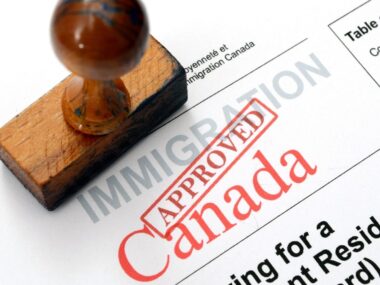
Many people living in South Africa are now thinking seriously about Canada permanent residence. For some, the reason is career growth. For others, it is family stability, better long-term planning, safer settlement options, or the need for a clearer immigration future.
Canada is attractive because it has structured immigration pathways for skilled workers. You do not always need a Canadian job offer, and you do not always need to be inside Canada before applying. If you have skilled work experience, good English or French results, recognised education, and enough settlement funds, Canada PR may be possible.
The most popular route for many applicants is Express Entry. It is competitive, but the process is clear. You need to understand the requirements, prepare strong documents, and choose the right pathway based on your profile.
Why People Are Leaving South Africa for Canada PR
South Africa has been home to many African migrants, professionals, students, business owners, and families. But many people are now looking at other countries because they want more certainty. Some are worried about job stability, immigration pressure, safety, documentation issues, and limited long-term settlement options.
Canada PR gives you a more secure status. As a permanent resident, you can live, work, and study in Canada permanently. You can also include your spouse or partner and dependent children if they qualify.
Canada also offers a route to citizenship if you meet the residency and eligibility rules later. This makes it attractive for families who want to stop moving from one temporary status to another.
Best Canada PR Routes from South Africa
For many people in South Africa, the best starting point is Express Entry. Canada uses Express Entry to manage permanent residence applications under key skilled worker programs, including the Federal Skilled Worker Program, Federal Skilled Trades Program, Canadian Experience Class, and some Provincial Nominee Program streams.
For applicants outside Canada, the Federal Skilled Worker Program is usually the most relevant route. You can apply from South Africa without first studying or working in Canada.
| Canada PR Route | Best For | Job Offer Needed? | Main Benefit |
|---|---|---|---|
| Federal Skilled Worker Program | Skilled workers outside Canada | No | Direct PR route from South Africa |
| Provincial Nominee Program | Applicants wanted by a Canadian province | Sometimes | Can add 600 CRS points |
| Federal Skilled Trades Program | Skilled trades workers | Sometimes | Good for technical and trade occupations |
| Canadian Experience Class | People with Canadian work experience | No | Strong route after working in Canada |
| Atlantic Immigration Program | People with job offers in Atlantic Canada | Yes | Good option for smaller provinces |
What Is Canada Express Entry?
Express Entry is an online system. You create a profile, enter your details, and Canada gives you a score called the Comprehensive Ranking System score, often called CRS.
Your CRS score is based on age, education, language ability, skilled work experience, spouse factors, Canadian job offer, provincial nomination, and other details. The higher your score, the better your chance of receiving an Invitation to Apply for permanent residence.
Express Entry does not guarantee PR. It only puts you in the pool. You still need to receive an invitation before you can submit your full PR application.
Who Can Apply from South Africa?
You may be able to apply if you have skilled work experience, a recognised qualification, good English or French results, and enough money to settle in Canada.
| Requirement | What You Need |
|---|---|
| Age | Best points are usually between 18 and 35 |
| Work experience | At least 1 year of skilled work experience |
| Education | Foreign qualification assessed through ECA |
| Language test | IELTS General Training, CELPIP, TEF Canada, or TCF Canada |
| Proof of funds | Usually required for Federal Skilled Worker applicants |
| Police certificate | Required from countries where you lived |
| Medical exam | Required when requested |
| CRS score | Higher score improves invitation chances |
If your education was completed outside Canada, you need an Educational Credential Assessment, also called ECA. This confirms how your qualification compares with a Canadian qualification.
Canada PR Fees in 2026
You need to budget properly before starting. Canada increased permanent residence fees on 30 April 2026. For economic immigration, including Express Entry, the main applicant fee is CAD $1,590, including the right of permanent residence fee. A spouse or partner is also CAD $1,590, and each dependent child is CAD $270.
| Applicant | Canada PR Fee |
|---|---|
| Main applicant | CAD $1,590 |
| Spouse or partner | CAD $1,590 |
| Dependent child | CAD $270 |
| Right of permanent residence fee only | CAD $600 |
| Application without right of permanent residence fee | CAD $990 |
These are only government fees. You should also budget for language tests, education assessment, medical exam, police certificates, document copies, courier costs, passport renewal, and flights.
Other Estimated Costs to Prepare
Apart from Canada PR government fees, you should prepare for other costs. These amounts can change depending on the test provider, country, exchange rate, family size, and document requirements.
| Item | Estimated Cost |
|---|---|
| IELTS General Training or approved language test | Varies by country and test centre |
| Educational Credential Assessment | Around CAD $200 to CAD $300 plus delivery |
| Medical exam | Varies by country and clinic |
| Police clearance | Varies by country |
| Passport renewal | Varies by country |
| Document copies and courier | Varies by location |
| Flight ticket to Canada | Depends on airline, season, and destination |
| Initial accommodation | Depends on city and family size |
This is why you should not only plan for the application fee. You also need a full relocation budget.
Proof of Funds for Canada PR
If you apply under the Federal Skilled Worker Program or Federal Skilled Trades Program, you usually need proof of funds. This shows Canada that you have enough money to settle after arrival. IRCC confirms that proof of funds is required for Federal Skilled Worker and Federal Skilled Trades applicants, unless an exemption applies.
| Family Size | Minimum Funds Required |
|---|---|
| 1 person | CAD $15,263 |
| 2 people | CAD $19,001 |
| 3 people | CAD $23,360 |
| 4 people | CAD $28,362 |
| 5 people | CAD $32,168 |
| 6 people | CAD $36,280 |
| 7 people | CAD $40,392 |
| Each extra person | CAD $4,112 |
Your funds must be genuine and available. Canada may ask for official bank letters showing account numbers, opening dates, current balances, average balances, loans, and debts.
Jobs in Demand in Canada
Canada does not invite people based on nationality. It looks at skills, language ability, education, work experience, and labour needs.
In 2026, Canada’s category-based Express Entry selection includes French-language proficiency, healthcare and social services, STEM, trades, education, transport, and other targeted groups.
| Sector | Example Roles |
|---|---|
| Healthcare | Nurses, pharmacists, care workers, medical technologists |
| Technology | Software developers, data analysts, cybersecurity analysts |
| Finance | Accountants, auditors, financial analysts |
| Engineering | Civil, mechanical, electrical, and industrial engineers |
| Skilled Trades | Electricians, welders, plumbers, carpenters |
| Education | Teachers and early childhood educators |
| Transport | Logistics workers, transport supervisors, aircraft mechanics |
| Social Services | Social workers and community support workers |
Your job title alone is not enough. Canada checks your job duties against the National Occupational Classification code. This means your employment letter must match the duties of the NOC code you choose.
Estimated Salary Ranges in Canada
Salary in Canada is not fixed. It depends on province, city, employer, experience, qualification, licensing, and industry demand. The figures below are estimated annual ranges to help you understand what some skilled workers may earn.
| Job Role | Estimated Annual Salary Range |
|---|---|
| Registered nurse | CAD $80,000 to CAD $95,000 |
| Software developer | CAD $85,000 to CAD $120,000 |
| Accountant | CAD $65,000 to CAD $90,000 |
| Financial analyst | CAD $70,000 to CAD $100,000 |
| Electrician | CAD $60,000 to CAD $85,000 |
| Project manager | CAD $80,000 to CAD $115,000 |
| Data analyst | CAD $65,000 to CAD $95,000 |
| Teacher | CAD $55,000 to CAD $85,000 |
| Early childhood educator | CAD $40,000 to CAD $60,000 |
Do not choose a province based on salary alone. A higher salary in Toronto or Vancouver may come with higher rent, childcare, transport, and living costs.
Best Canadian Provinces to Consider
Different provinces have different job markets. You should choose based on your career, family needs, settlement budget, and long-term plans.
| Province | Best For | Main Advantage |
|---|---|---|
| Ontario | Tech, finance, healthcare, business | Large job market |
| Alberta | Engineering, trades, energy, healthcare | Strong wages |
| British Columbia | Tech, healthcare, construction | Strong economy |
| Manitoba | Families and skilled workers | Lower living costs |
| Saskatchewan | Trades, agriculture, healthcare | Useful PNP options |
| Nova Scotia | Healthcare, education, service jobs | Atlantic Canada route |
| New Brunswick | Transport, healthcare, skilled trades | Lower costs |
| Newfoundland and Labrador | Healthcare, energy, trades | Atlantic Canada option |
Do not choose a province only because it is popular online. Choose the province where your occupation has demand and where your family can settle realistically.
Estimated Cost of Living by Province
Cost of living can vary widely across Canada. The figures below are general estimates and can change based on city, rent, family size, lifestyle, and inflation.
| Province | Cost Level | Notes |
|---|---|---|
| Ontario | Medium to high | Toronto and Ottawa can be expensive |
| British Columbia | High | Vancouver is one of the most expensive cities |
| Alberta | Medium | Good wages with moderate living costs in many areas |
| Manitoba | Lower to medium | Often more affordable for families |
| Saskatchewan | Lower to medium | Good option for lower rent and smaller cities |
| Nova Scotia | Medium | Halifax can be more expensive than smaller towns |
| New Brunswick | Lower to medium | Often more affordable than larger provinces |
| Newfoundland and Labrador | Medium | Costs depend on location and transport needs |
This table is only a guide. Before choosing a province, check current rent, job openings, schools, public transport, and licensing requirements.
Step-by-Step Guide to Leave South Africa for Canada PR
Start by checking your eligibility under the Federal Skilled Worker Program. Look at your age, qualification, work experience, language ability, and proof of funds. You should also confirm that your occupation is skilled under Canada’s NOC system because your job duties matter more than your job title.
Next, choose the correct NOC code. Do not choose a code only because the title sounds similar. For example, two people may both be called “manager,” but one may be doing operations duties while another is doing sales duties. Canada will focus on the actual duties.
After that, write IELTS General Training or another approved language test. Do not use IELTS Academic for Express Entry. If you can speak French, you can write TEF Canada or TCF Canada. A higher language score can make a big difference to your CRS score.
Then get your education assessed. If your qualification is from South Africa or another country outside Canada, you need an Educational Credential Assessment. Do this early because assessment can take weeks or months.
Once your language test and ECA are ready, calculate your CRS score and create your Express Entry profile. Enter your work history, education, test scores, proof of funds, and family details carefully. Your profile must match your documents later.
Documents to Prepare
Do not wait until you receive an invitation before preparing documents.
| Document | Purpose |
|---|---|
| Passport | Identity and travel document |
| Language test result | Proof of English or French ability |
| ECA report | Proof of education equivalency |
| Employment letters | Proof of skilled work experience |
| Proof of funds | Proof of settlement money |
| Police certificates | Criminal background checks |
| Medical exam | Health admissibility |
| Marriage certificate | Needed if applying with spouse |
| Birth certificates | Needed for children |
Employment letters are very important. They should include job title, duties, salary, working hours, employment dates, employer name, and contact details.
Benefits and Challenges
Canada PR gives you long-term stability. You can live, work, and study in Canada permanently. You can also move between most provinces, change employers, and build Canadian work experience.
For families, PR can make planning easier. Children can attend school, spouses can work depending on their situation, and the family can work toward citizenship later.
The main challenge is cost. You need money for tests, education assessment, application fees, medicals, police certificates, proof of funds, and flights. The first few months in Canada can also be difficult because rent may be high, the weather can be cold, and finding your first professional job may take time.
Some occupations require licensing. Nurses, doctors, engineers, teachers, accountants, and social workers may need Canadian registration before working fully in their profession.
Common Mistakes to Avoid
Do not choose the wrong NOC code. Your duties must match the code.
Do not submit weak employment letters. Canada needs clear proof of your work experience.
Do not use fake documents or fake bank statements.
Do not wait until the last minute before requesting police certificates.
Do not assume a job offer is compulsory. Many people apply through Express Entry without one.
Do not ignore provincial nomination. A province can make your application much stronger if your skills match its needs.
Conclusion
Leaving South Africa for Canada PR is possible, but you need a proper plan. Express Entry is one of the best routes for skilled workers because you can start from outside Canada and you do not always need a job offer.
Start by checking your eligibility, writing IELTS General Training, completing your ECA, calculating your CRS score, and preparing your documents. If your score is not strong enough, look at provincial nomination, French language, job offers, and in-demand occupations.
Canada PR is not automatic, but it gives you a clear and legal route to long-term settlement. With the right preparation, you can move from uncertainty to a more stable future in Canada.